Drain Field Repair in Covington, KY
When a drain field starts to fail, the signs usually show up in the yard first. If you need drain field repair in Covington, the job begins with a careful diagnosis of why the field stopped absorbing wastewater, so the repair addresses the cause and not just the wettest spot.
How a Drain Field Does Its Job
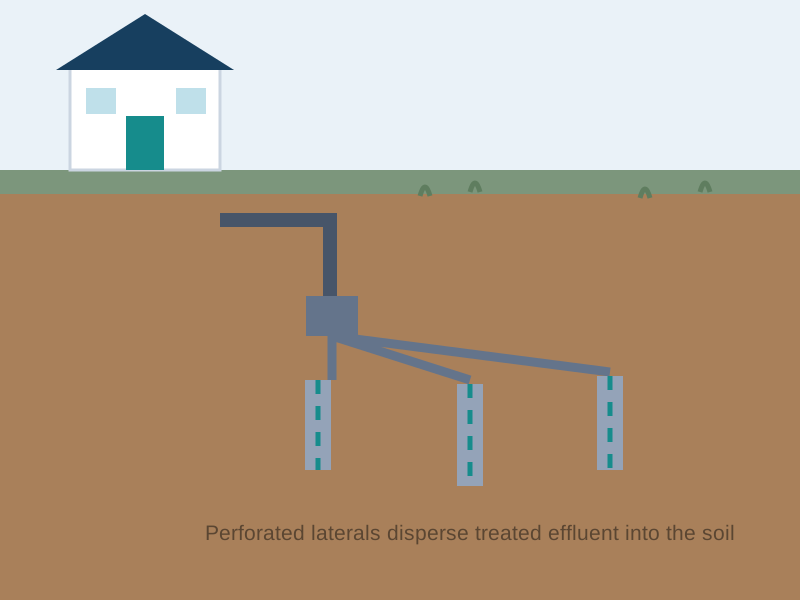
A drain field, also called a leach field, is the second half of your septic system. After wastewater leaves the tank — where solids settle to the bottom and grease floats to the top — the liquid portion flows out into a network of perforated pipes buried in shallow trenches. From there it seeps slowly into the soil, which filters and treats it as it moves downward.
A healthy field handles this quietly for many years. Problems begin when the soil around the pipes becomes clogged, the pipes themselves are damaged, or more water enters the field than it can absorb. Because the field is buried, repair starts with locating the system components and narrowing the failure down to a specific area rather than guessing.
Signs Your Drain Field Is Failing
A failing field rarely fails silently. Watch for these warning signs around your Covington property:
- Soggy, spongy ground over the field area, even during dry weather
- Wastewater surfacing in the yard or pooling near the field
- Strong sewage odors outdoors, especially after laundry or showers
- Unusually green, lush stripes of grass growing over the lateral lines
- Slow drains, gurgling, or backups throughout the whole house, not just at one fixture
One slow sink usually points to a single drain line. Trouble at several fixtures at once often points further downstream — to the tank or the field itself.
Common Causes of Drain Field Failure
Most field failures trace back to a handful of causes:
- Solids escaping the tank. When a tank goes too long between pump-outs, sludge and scum wash into the field and clog the surrounding soil. This is the most preventable cause of failure.
- Tree and shrub roots. Roots seek out the moisture inside lateral lines and can crack, block, or shift the pipes over time.
- Weight over the field. Cars parked or driven over the area compact the soil and can crush buried lines.
- Too much water. Heavy laundry loads, leaking fixtures, and additional occupants can overload a field faster than the soil can drain it.
- Age. Older laterals and distribution boxes shift, corrode, and wear out after decades of service.
What Drain Field Repair Can Involve
Locate and diagnose
The tank, distribution box, and lateral lines are located, and the failing area is identified before any digging begins.
Expose the problem area
Only the affected section is opened up, which keeps the rest of the yard and the working parts of the field undisturbed.
Repair or replace components
Depending on the findings, this can mean cleaning lines, replacing damaged laterals, or fitting a new distribution box so flow is shared evenly.
Restore and advise
The area is closed up, and you get practical guidance on water use and pumping so the repaired field is not overloaded again.
Where a system layout allows, resting or rotating sections of the field can also give saturated soil time to recover.
Pumping Is What Protects the Field
The most effective way to extend a drain field's life is unglamorous: pump the tank on schedule. Every three to five years is the typical guidance, adjusted for household size and tank size. When solids stay in the tank where they belong, the field only handles liquid — and liquid is what it was built for. If your tank is overdue, a pump-out paired with a thorough tank cleaning is often the right first step before field work begins. And when the problem turns out to be inside the tank or its baffles, repair work on the tank itself can stop further damage downstream. Both sit alongside regular septic tank pumping in Covington as part of complete system care — see all of our services for the full picture.
Frequently Asked Questions
Can a drain field be repaired, or does it always need replacement?
Many failures are localized — one crushed lateral, a failed distribution box, or a section clogged by solids — and those can be repaired without replacing the whole field. When the soil is saturated throughout or the system is undersized for the home, replacing the field may be the realistic option. A careful diagnosis comes first either way.
How long does drain field repair take?
It depends on what the diagnosis finds. Opening and repairing a single lateral is a much smaller job than replacing several lines or a distribution box. Once the problem area is exposed, we can explain the scope of the work before the repair goes ahead.
Will repair work tear up my whole yard?
No. Repair targets the affected section of the field rather than the entire system, so digging is limited to the area around the damaged lines or components. The rest of the yard and the working parts of the field are left undisturbed.
How do I keep a repaired field from failing again?
Stay on a regular pumping schedule so solids never reach the field, spread out heavy water use, keep vehicles off the field area, and be mindful of trees and shrubs planted near the lines. Those habits protect both repaired and original fields.
Drain Field Problems? Let Us Take a Look
If your yard is soggy, odors are lingering, or drains are slowing throughout the house, call EverFlow Septic Solutions to check today's availability and schedule a visit.
Call (770) 318-7881 Request Septic Service